Why Gardeners Are Placing Plastic Forks in Their Vegetable Gardens — The Brilliant Reason Behind It
Who would have imagined that something as ordinary as a plastic fork sitting unused in a drawer could become a helpful tool in the vegetable garden? At first, the idea of sticking plastic forks into the soil might sound like a joke between neighbors. But surprisingly, more and more gardeners—both beginners and experienced enthusiasts—are trying this unusual trick. Behind this simple action lies a clever idea that can make caring for your garden a little easier.
Protecting the vegetable garden without chemicals
Growing vegetables at home is rewarding, but it also comes with challenges. Between work, family, and everyday responsibilities, it’s not always possible to keep a constant eye on your plants. When attention slips, small animals often take the opportunity to move in and nibble on young shoots.
Garden centers offer many ready-made solutions, but not everyone feels comfortable using chemical treatments—especially when the fruits and vegetables will end up on the family table. These products can also become expensive over time, and many gardeners prefer methods that help preserve the natural balance of the soil.
So the question becomes: how can you protect your plants in a way that is simple, effective, and environmentally friendly?
The plastic fork trick: how it works
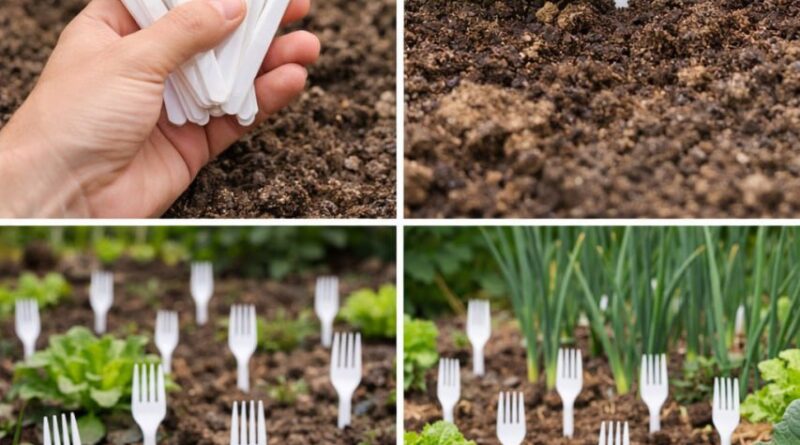
This is where the plastic fork method comes in. The idea is straightforward—place plastic forks into the soil around vulnerable plants with the prongs pointing upward.
Those upward-facing prongs form a small physical barrier. Animals that move along the ground, such as cats or small pests, tend to avoid walking across the uneven, uncomfortable surface. As a result, delicate plants like lettuce, strawberries, or young seedlings become less accessible.
Think of it as a tiny protective fence surrounding each plant. While it’s not a miracle solution, it can noticeably reduce damage, especially in smaller spaces like raised beds, garden boxes, or balcony planters.
An inexpensive and simple solution
One of the best things about this trick is that it costs almost nothing. If you have leftover plastic forks from picnics or take-out meals, you already have everything you need.
To set it up, lightly clear the soil around your plant if necessary, then push the forks into the ground with the prongs sticking upward. Space them evenly to create a consistent protective ring. Make sure they are firmly placed so they don’t fall over with wind or watering.
In just a few minutes, your plants have an added layer of protection.
It also gives a second life to objects that might otherwise sit unused in a drawer. Reusing simple items in the garden is a small but practical step toward more sustainable habits.
Perfect for balconies and small gardens
This method works particularly well in compact spaces. If you grow vegetables on a balcony or in small containers, young plants can be especially vulnerable.
Plastic forks offer targeted protection that’s easy to install or remove when needed. In a way, they act like miniature scarecrows—simple, modern, and surprisingly effective.
For a more discreet appearance, gardeners sometimes use green or beige forks so they blend better with the surrounding plants and soil.
Understanding the limits of the trick
Like most gardening tips, plastic forks are not a complete solution on their own. They work best as a preventive measure and are most useful in smaller areas.
If your garden faces bigger pest problems, it’s wise to combine several natural methods—such as mulching, rotating crops, proper watering, and occasionally removing pests by hand. Regularly checking your plants also helps catch issues before they become serious.
In the end, plastic forks may not be a magic solution, but they can provide a simple and creative boost for protecting your vegetable garden naturally.
And the next time you see a set of plastic cutlery after a picnic or take-out meal, you might look at it in a completely different way.